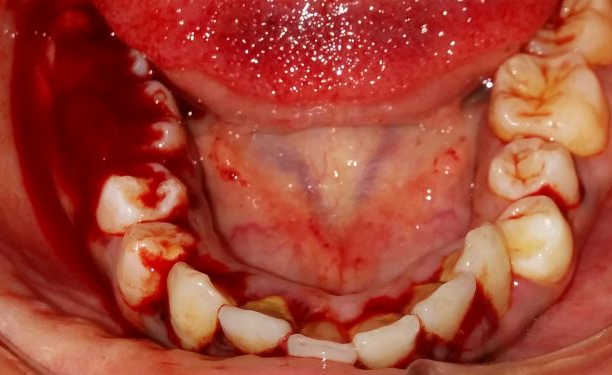
Blood is a living tissue composed of solid and liquid parts. The solid part is made of white and red blood cells, and platelets. Disorder of blood can affect one or more of these parts and may lead to prolong bleeding episodes that are fatal in children if undiagnosed.
Consensus shows 80% Indian suffer from life threatening blood disorder that remain undiagnosed due to unavailability of diagnostic facilities. Bleeding from the mouth is the primary finding at age of 6to 12 months when the first tooth erupts or at the loss of first tooth. This raises the first red flag in the scenario of prolonged and voluminous bleeds in the oral cavity. Most common site of spontaneous bleeding will be gums, frenum of lips and tongue and will occur at the slightest provocation in the form of brushing, food abrasion or even infection. Oral cavity is highly vascular and therefore profuse hemorrhagic episodes are seen among children under emotional stress and extreme physical activities.
Epistaxis (bleeding from nose) is the common condition in preschool children and prolong episodes of bleeding follow even on the simple allergic rhinitis. While children with sharp teeth may bite on cheeks, oral ulcers and bruising is commonly reported in their lips and tongue. Management of dental trauma needs an immediate attention to reduce blood loss. Oral treatment should therefore be provided by an equipped staff trained to diagnose and control bleeding in an event of emergency.
Hemophilia and Idiopathic Thrombocytopenic purpura (ITP) are commonly prevalent bleeding disorders among children. Hemophilia is an inherited disorder where the blood fails to clot normally and may be attributed due to absence of any of 12 factors responsible for clotting but majorly factor8,9 & 11. Such children will bleed longer through nose, oral cavity, urine, muscles and joints. ITP on the other hand, is an autoimmune (self-destructing) disorder with unknown cause, characterized by decreasing platelet number. Platelet are cell responsible to form a clot and as a result of deficiency easy bruising, bleeding from the gums and internal bleeding are evident. It may have a sudden onset following a viral fever and usually disappear in few weeks, commonly seen among 2-6 years old.
Currently no universally acceptable standard protocol is available for affected children of blood disorder to ensure a safe treatment in clinical setting therefore both local and systemic management is advisable in collaboration with a hematologist (blood specialist).Children with Hemophilia will need a prerequisite of antifibrinolytics (clot thickener)and stabilizing agents(clot protectors) and even blood transfusion in an event of excessive blood loss .ITP will require steroids, and platelets transfusion in case of fatal internal bleeding due to trauma.
Dental management prefers roots canal treatment over extraction and splinting over removal of loose fragment. Periodontal therapy for the gum diseases must be initiated on a regular basis to avoid emergency situation later. Interestingly, poor oral care, diet and fear of bleeding are the most common reason seen for failure to observe oral health. Therefore, reducing dental fear and anxiety is a key to continued dental care.
Most children can have a normal independent life. Preventive measure in form of protective clothing, padded crib, protective shield/helmet, bite guard during active sports are beneficial. Contact sports may be practiced with caution and drugs that may interfere with the body’s ability to control bleeding must be avoided. Most oral and dental diseases can be prevented but dental treatment with children of blood disorder is complex and requires dedicated training.
 GAMEFACE