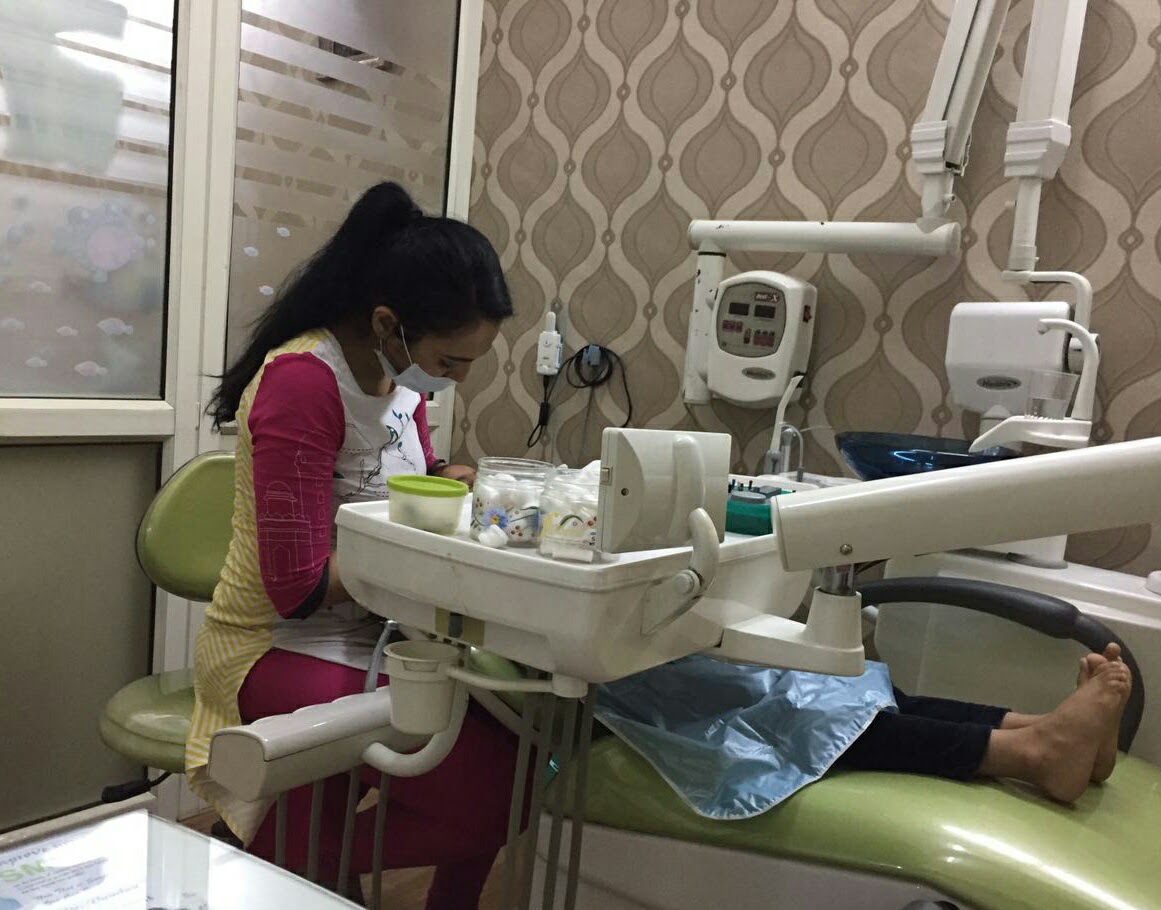
Children exhibit high caries prevalence under the age of 2-7 years old. Such high caries activity is caused by the acid producing bacteria in the plaque like Scardovia wiggesie, Lactobacillus salivarius, Streptococus mutans and Parascardovia denticolens.To counter this bacterial ingress silver was found to be indispensable for very many years. Perhaps the earliest use of silver was in the form of dental amalgam.
Silver has shown chemical affinity and by virtue of its active ions they interact with the thiol group of protein and phospholipids parts of bacterial membrane. Silver ions adhere to cell wall and via electrostatic attraction they can disrupt the bacterial envelope. Once inside the cell the silver ions deactivate the respiratory enzymes, generate reactive oxygen species and inhibit protein synthesis. This causes problem in DNA replication and cell production, thereby structural changes and cell death.
The antimicrobial efficacy of silver ions is inversely related to particles size, that is, lesser the size means higher efficiency with higher bactericidal effects. Biomaterial technology has evolved second generation of silver ions as nanosilver and nanoscale silver nanoparticles. At such size and with greater surface area, silver interact more intensely with other oxygen species and inorganic molecules creating oxidative stress.
The combine antibacterial effects of silver and the remineralizing effects of fluoride was seen in SDF , which is a promising therapeutic agent for managing caries lesions in young children and those with special care needs. The use of SDF is recommend for seniors who presented with increased risk of root caries. Silver in SDF (silver diamine fluoride) act as a potent germicidal and releases fluoride to reduce dental decay. Of the many concentration 38% SDF was found to be most effective and used commonly to prevent collagen degeneration and inhibit demineralization.38% SDF releases 44,800 ppm fluoride and was best known to arrest caries attack by increasing the micro hardness of dentine in primary teeth with the ability to form sclerotic dentine.
The major drawback of SDF is staining of carious tissues to dark black due to oxidation process of ionic silver. To overcome this drawback nano silver flourides(NSF) were developed. It is a colloid base on chitosan, silver nano particles and fluoride which prevent dental decay in children by inhibiting plaque and biofilm formation. Addition of silver nano into dental material like composite resin has shown to reduce bacterial count of S.mutans and L.bacillus. As a new anticaries agent silver nano was found to assert potent antimicrobial effect about 25 fold higher than chlorhexidine. As a dentifrice/toothpastes, 5% Nano-silver incorporated Sodium fluoride (NSSF) was 8 times more economical compared to SDF and hence its use at community level can be cost effective and reliable.
Silver nano particle have shown to reduce incidence of dental decay in milk teeth which are most sensitive to fluoride treatment because the enamel is 150 times more permeable than permanent teeth. The silver will tend to remineralize dentine and enamel by increasing fluoride uptake when acidic breakdown of enamel is increased by bacteria.
To meet the ever increasing demand of good oral health among underprivileged and special needs where meals are highly cariogenic and oral care is difficult silver nano particles was found to be safe and equitable caries control agent that can be used to help meet WHO millennium goals and fulfill US criteria for 21st century medical care.
Efforts with the health sector should be made at global scale to promote highest level of evidence based dentistry with long term follow up for making conclusive recommendation on silver products. This could be a major breakthrough in preventive and therapeutic dentistry for those who need oral care and are underprivileged or require special care.
 GAMEFACE