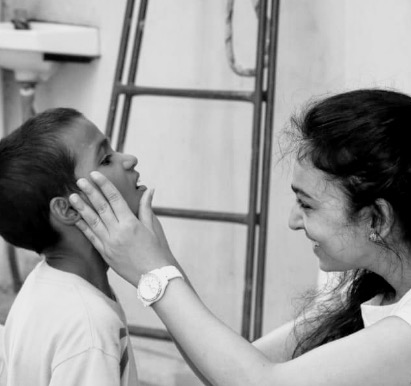
One billion people worldwide are malnourished, and around one billion live with a disability. According to UNICEF 2006, 5-6 million children under age of 5 years contribute to mortality rate because of high prevalence of malnutrition. This accounts to 10 children/ minute. Most of these disabilities weather physical or sensory like deafness, blindness, intellectual and mental health are results from the nutritional deficiency at numerous points throughout life cycle.
Therefore, disability and malnutrition go hand in hand in description of cause and contribution per se. While the Right to food mentions the right of people with disability to have physical access to adequate food and nutrition, it is insufficient dietary intake which is the main issue.
Mental retardation as well as hearing, language, visual, and behavioral disorder are often associated to neurological impairment causing dysphagia of oral, pharyngeal or esophageal phase. Disabilities places an individual at particularly high risk of nutritional deficiency inclusive of cerebral palsy, craniofacial anomalies like cleft lip and/or palate and the many genetic syndromes such as Down syndrome and Pierre Robin sequence which are associated with oral–motor feeding and swallowing problems.
Difficulty in oral phase (seen in in 93 %) affects biting (70%) cleaning behavior (70%), chewing (65%) seen in with respect to solid food. Difficulty in pharyngeal phase effects coughing, swallowing and gag reflux seen in 75 % cases.
Some 90% of children with cerebral palsy have difficulty feeding which occur within first 12 months of life. Feeding process needs special positioning to control muscle spasm as excessive food spillage leads to malnutrition as much of it is not available for nutritional needs. Additionally, children eat more slowly taking up to 2-12times longer to swallow and 16 times longer to chew as a result of which they are more prone to underfeeding and total dependency on the care taker seen in 60% disabled children. Children of Down syndrome are at increased risk of choking and developing pneumonia and 71% presented with frequent coughing and choking.
Cognitive impairment may be responsible of inability to communicate hunger or satiety, inability to request food and drink and to communicate symptom as a result, child receive less food. This is further aggravated by the stigma where disabled children receive limited resources or even not fed intentionally over child contributing to household.
Family members accounting from the lack of knowledge on how to feed may be giving only liquid diet causing severe malnutrition and in extreme cases death. Poor early growth has been found to be a contributing factor for suboptimal pelvic growth in girls and increases risk of future children having disability.
A combination of macro and micronutrient malnutrition seen in iron, selenium, iodine, carnitine deficiency are results of tube feeding impairing cognitive, behavioral, and emotional development. Children who are tube fed develop nutrition deficiency as the formula taken is beneficial only when adequate volumes are consumed meeting their daily age-related requirement.
Low maternal folate is associated with neural tube defect. Antiepileptic drugs are found to have catabolic effects on vitamin synthesis causing hypovitaminosis D and subsequent hyperthyroidism. This decreases bone density and increases risk of fracture especially in cerebral palsy. As many as 250,000 to 500,000 children became blind as a results of Vitamin A deficiency.
Nutritional assessment is fundamental to understand underlying disease, level of motor and cognitive impairment and severity of gastro intestinal disorder. In recent years emphasis has been given to link malnutrition to disability. There should be adequate inflow of data and coordinated program so that nutrition services can mitigate disability and disability program improve nutrition simultaneously.
 GAMEFACE