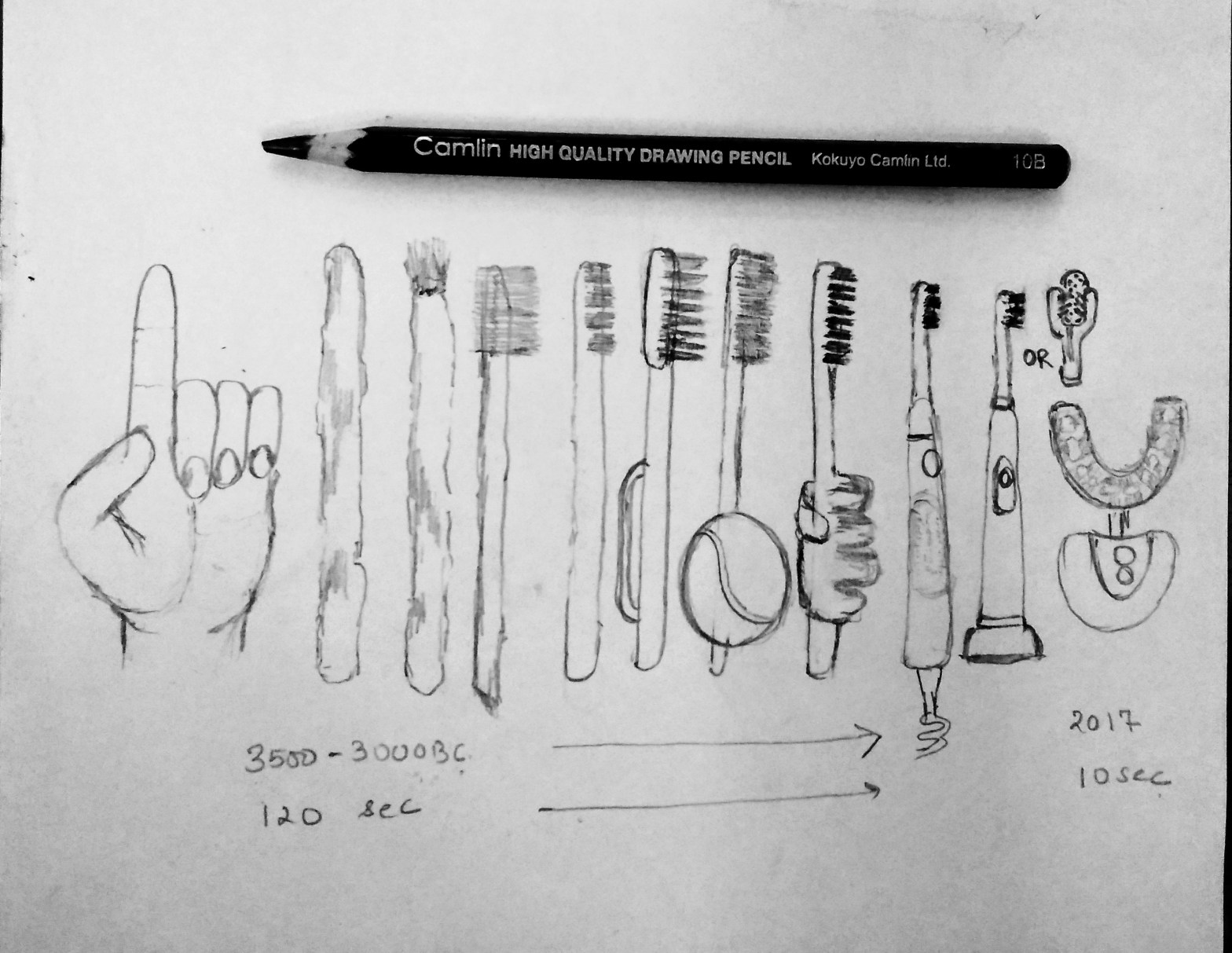
Disorder of neural development contributes to the lack of necessary manual dexterity. These lack of fine motor skills adds up to the difficulties of care givers and accounts for poor oral health among children with special needs.
Regular manual tooth brush depend on the user’s controlled movements but the presence of physical and cognitive disabilities among special needs can create difficulties in both holding as well as manipulating a tooth brush. Powered toothbrush on the other hand provide controlled pressure and movement along with time assisted technology.
These electronic tooth brush provide vibration and oscillation or mixed movement that effectively removes plaque and inhibit certain harmful bacteria affecting gingival health. Sonic vibration have been studied to stimulate salivary flow in xerostomia (including those induced by medication).
Different head sizes are powered to accomplished cleaning from soft, medium to hard brushing among different age group. Hard bristles are mostly recommended to patient with special needs, as they allow shorter brushing time and less application of pressure during brushing. Brush head in the powered brushes are compatible with better grasping efficiency among children with special needs.
However brushing with powered tooth brush has been associated to trigger the external stimulus among children with reflex epilepsy and therefore there use is warranted in such patient.
An element of safety puts these powered toothbrush at par with the manual toothbrush as the bristles are attached securely to the head, unlike filaments and even parts of manual brush which are reported to cause gingival and intra oral injuries following trauma.
Researchers conclude that powered tooth brush can remove 60% more plaque. As suggested by Cochrane study where powered tooth brush were compared to manual tooth brush regarding plaque removal, health of gingiva, staining and calculus, only powered toothbrush with rotation -oscillation action provided advantage.
The Artificial Intelligence (AI) assisted technology is the next step to the future of brushing. This basically requires you to guide along the tooth surface with 3D Mouth Mapping in Real time. The sensor in the brushes analyses brushing in real time and monitor progress through a mobile application and even allows you to cover those underbrush surfaces commonly skipped routinely. The assisted device will not only provide with different brushing techniques, pressure combination on various tooth surface but will also detect the change in oral environment and plaque accumulation,notifying you via an alarm to take steps for a better oral hygiene.
 GAMEFACE