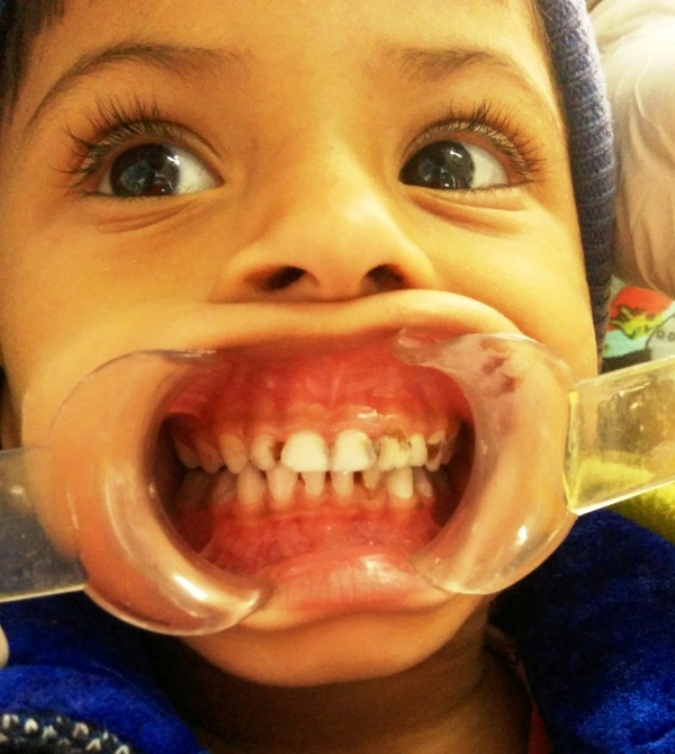
Children with special needs receive inadequate oral health care when compared to the nondisabled population.A study on Indian children with special health care needs estimated a high prevalence of caries (89.1%) as well as poor periodontal health and malocclusion. Children with special needs have a higher incidence of dental caries, periodontal disease or dental trauma as supported by the literature.The untreated oral disease in these individual adds to the neglect but more so on the existing financial burden caused by the already existing medical condition.
Uncoordinated chewing and uncoordinated tongue may not be able to adequately clean all oral surfaces leaving more food in the mouth as seen in cerebral palsy.There is difficulty in performing proper tooth brushing due to limited manual dexterity. Diet of children is mostly comprised of fermentable carbohydrates along with with carciogenic snacks and other unhealthy eating habits. Intake of medications includes high sugar base syrup which further aggravates tooth decay.Certain medication may precipitate side effects like increase dryness of mouth, gingival hyperplasia in children taking antiepileptic medications for example; phenytoin,(nifedipine) and cyclosporine. Gastroesophageal re-flux leads to disease and vomiting increasing the acidic nature of saliva that has direct deleterious effect on enamel.
Children with low birth weight, developmental delays, or certain genetic syndromes may be at increased risk for enamel hypoplasia and dental caries. Malocclusion and crowded teeth occur more often in children with abnormal muscle tone (cerebral palsy), mental retardation, and craniofacial abnormalities. Bruxism can lead to enamel loss and difficulty with chewing or tooth sensitivity. It can lead to wear on the teeth, flat tooth surfaces, headaches, pain, and gingival disease.
All children with special health care needs fall into a high risk category .Trauma to the face and mouth exhibited by self injurious behavior occurs more frequently in children with seizures, developmental delays, poor muscle coordination, cerebral palsy or severe mental retardation and abnormal protective reflexes.
Children with special health care needs should be referred to a dentist by 1 year of age.An integrated approach with multiple specialties is best treatment consideration followed by continual care and incremental approach every three month. Access to such clinical care has to be streamlined and centralized through dispensaries or satellite clinics.
 GAMEFACE