The National Policy for Persons with Disabilities (2006) recognizes that Persons with Disabilities are valuable human resource for the country and seeks to create an environment that provides equal opportunities, protection of their rights and full participation in society.To facilitate the national objective, there is a need for collection, compilation and analysis of data on disability.
Eight categories of disability were used in the 2011 census: 1)seeing disability, 2)hearing disability, 3)speech disability, 4) movement disability, 5)mental retardation, 6)mental illness, 7) any other disability, and 8)multiple disability.
The 2014 bill expanded the definition of disability with 19 other conditions which include blindness, low vision, leprosy cured persons, hearing impairment(deaf and hard of hearing), locomotor disability, dwarfism, intellectual disability, mental illness, autism spectrum disorder, cerebral palsy, muscular dystrophy, chronic neurological conditions, specific learning disabilities, multiple sclerosis, speech and language disabilities, thalessimia, hemophillia, sickle cell disease and multiple disabilities including deaf and blindness.
As per Census 2011, in India, out of the 121 Cr population, about 2.68 Cr persons are ‘disabled’ which is 2.21% of the total population.Among the disabled population 56% (1.5 Cr) are males and 44% (1.18 Cr ) are females.In the total population, the male and female population are 51% and 49% respectively.Majority (69%) of the disabled population resided in rural areas (1.86 Cr disabled persons in rural areas and 0.81 Cr in urban areas).In the case of total population also, 69% are from rural areas while the remaining 31% resided in urban areas.
The disability among children is a matter of serious concern as it has wider implications.The Census 2011 showed that, in India, 20.42 lakhs children aged 0-6 years are disabled. Thus, one in every 100 children in the age group 0-6 years suffered from some type of disability. 1.24% of the total children (0-6 years) are disabled. The percentage of male disabled children to total male children is 1.29% and the corresponding figure for females is 1.19%.The proportion of disabled males to total males is higher than the corresponding proportion for females at all India and at rural and urban areas.The same pattern has been observed in the case of children (0-6) years.Of these 23% of the disabled children (0-6 years) are having disability in hearing, 30% in seeing and 10% in movement.7% of the disabled children have multiple disabilities. A similar pattern is observed among male and female disabled children.
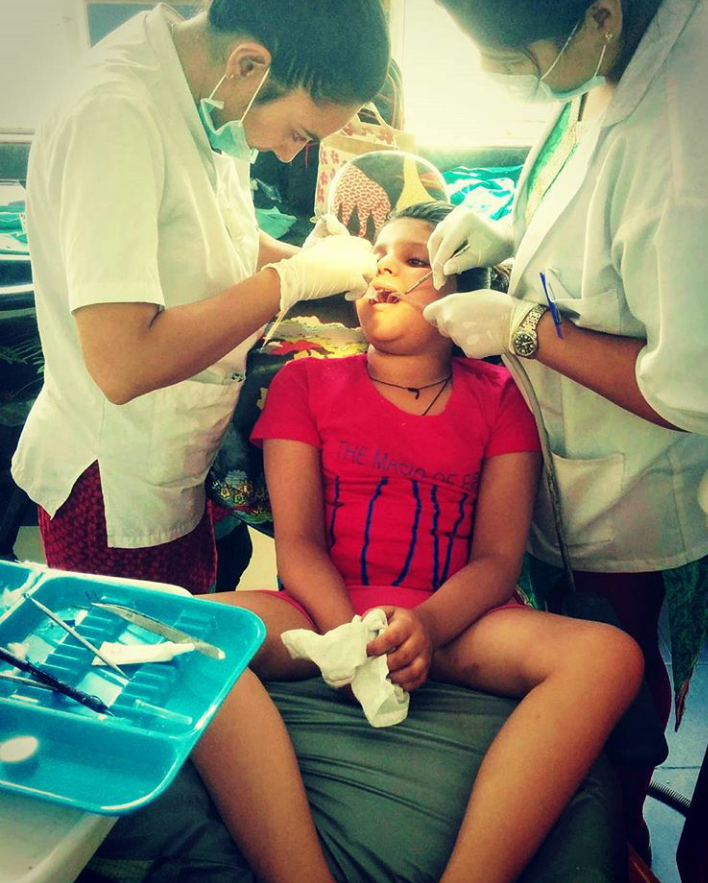
Studies of literature show that children with special needs receive inadequate oral health care when compared to the non disabled population.What makes it more ominous is the fact that children with special needs have a higher incidence of dental caries, periodontal disease or dental trauma.The encumbrance of the oral disease in these individual adds to the existing psychological, emotional and financial burden caused by the already existing medical condition the corresponding figure for females is 1.19%.The proportion of disabled males to total males is higher than the corresponding proportion for females at all India and at rural and urban areas.The same pattern has been observed in the case of children (0-6) years.Of these 23% of the disabled children (0-6 years) are having disability in hearing, 30% in seeing and 10% in movement. 7% of the disabled children have multiple disabilities.A similar pattern is observed among male and female disabled children.
Inclusive health for all should not just be the provision of health services but it should ensure that people with disability along with others who are disadvantaged,and discriminated by society receive the due health services so that they can contribute to the overall development of a community.
 GAMEFACE